Types of Natural Stones we Restore and Clean
Marble
Marble has played a significant role in art and architecture throughout history. It has been used in iconic structures such as the Parthenon in Athens, the Taj Mahal in India, and the Lincoln Memorial in the US.
Some popular types include Carrara, Calacatta, Statuario, and Emperador marble. Marble can be polished to a high gloss, honed to a matte finish, or honed to a satin finish.
While marble is relatively durable, it is softer and more porous than granite. It can be prone to scratching, staining, and etching from acidic substances.

Travertine
Travertine forms when calcium carbonate-rich waters flow through limestone and deposit minerals. Over time, these deposits build up, forming layers of travertine rock.
Travertine typically has a porous and pitted surface texture, often characterized by visible holes and voids.
Since Travertine is softer and more porous than granite or marble. It can be prone to scratching, staining, and etching, especially if not properly maintained.
Soapstone
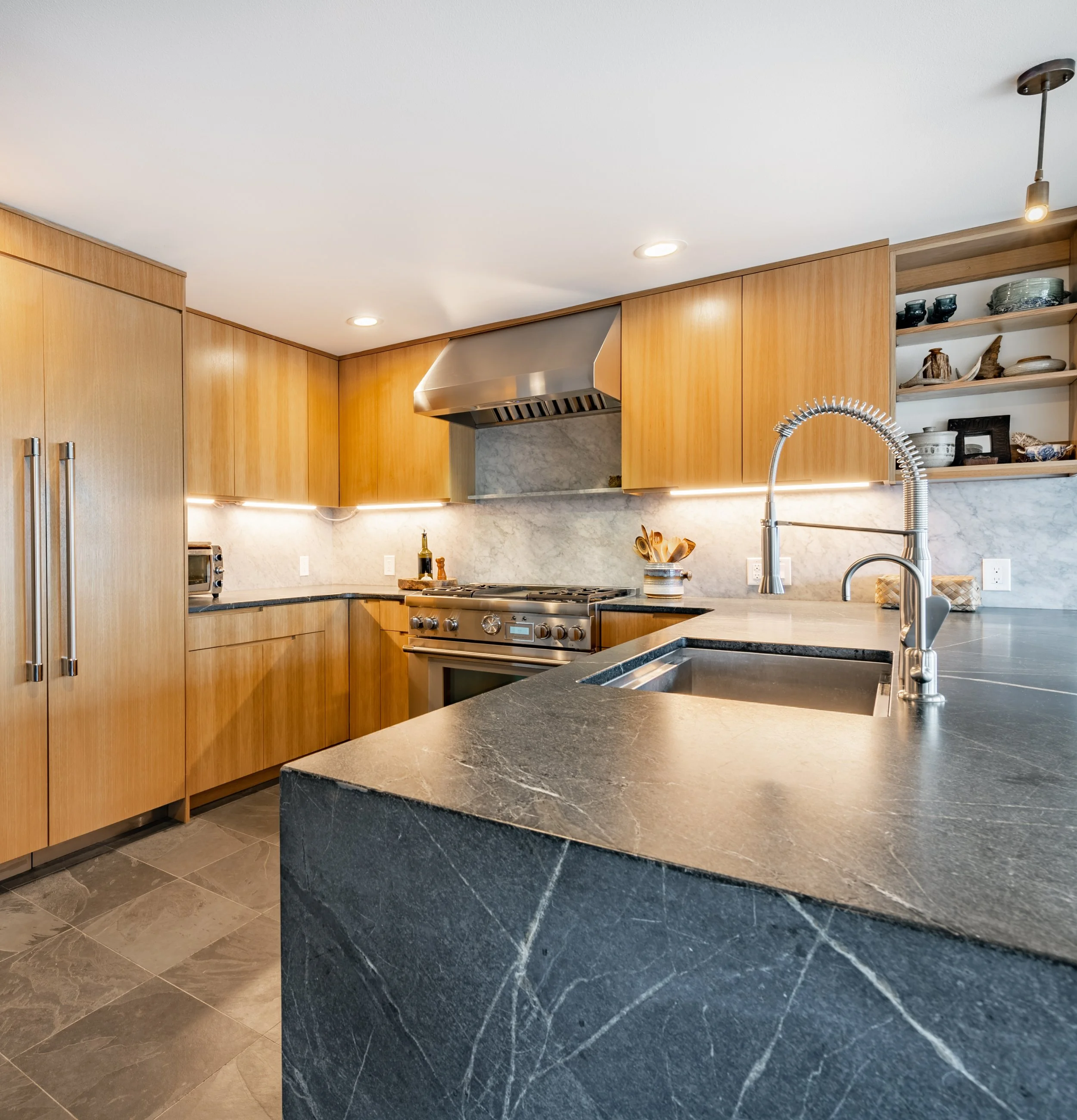
Soapstone is primarily composed of talc, which gives it its characteristic soapy feel. It is known for its durability and heat resistance. Since Soapstone is non-porous and does not react to acidic substances, it is suitable for use in kitchen countertops and sinks. Due to its pleasant appearance, soapstone is a popular choice in many contemporary households.
Soapstone is relatively low-maintenance and easy to clean. It only needs restoration when it gets worn and becomes non-uniform in and around areas of frequent use.
Granite
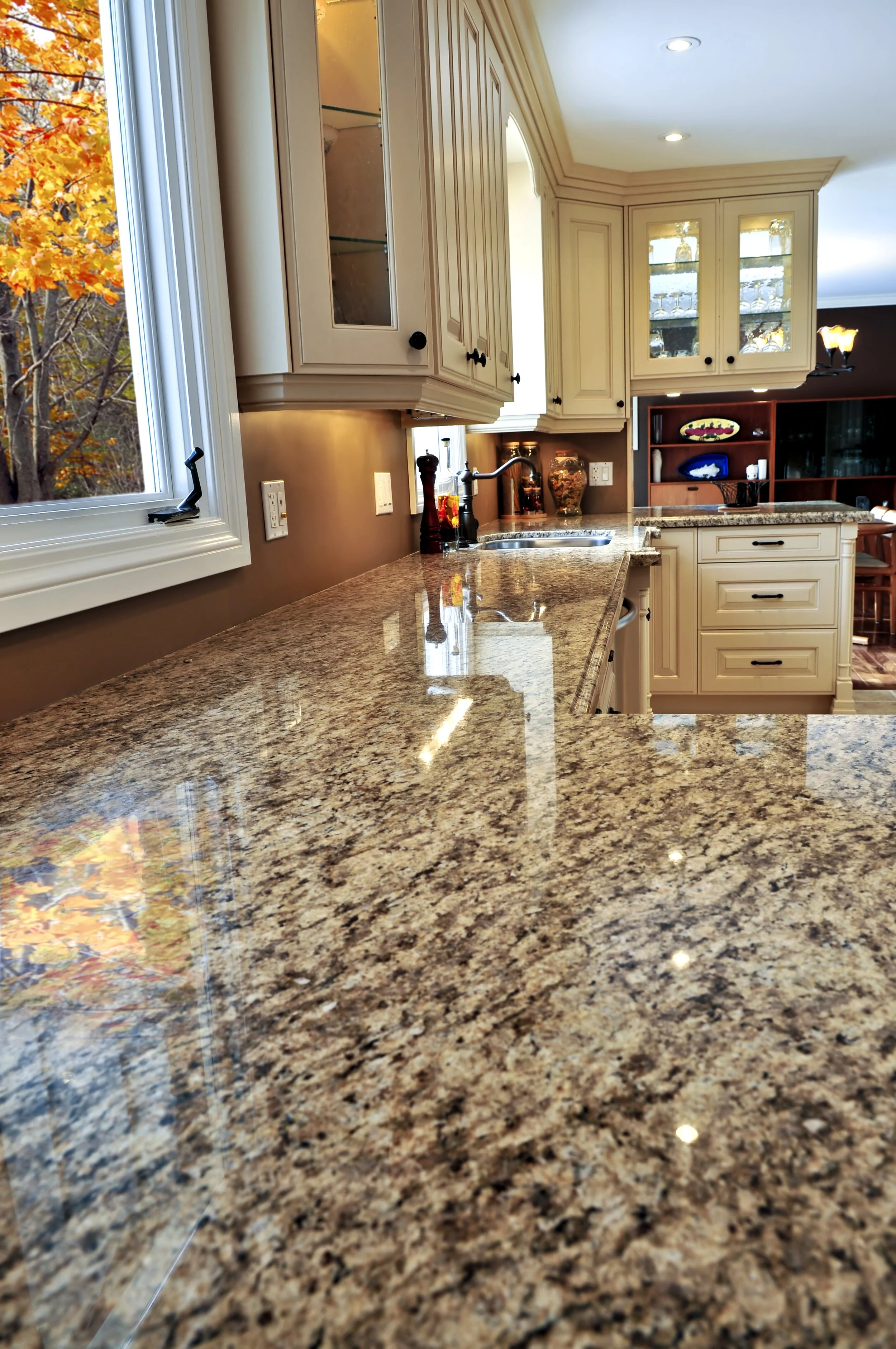
Granite is primarily composed of three minerals: quartz, feldspar, and mica. These minerals give granite its characteristic speckled appearance. It comes in a variety of colors, including white, gray, pink, red, black, and green. The color variations are due to differences in mineral composition and the conditions under which the granite formed. Granite is a popular choice for kitchen countertops, flooring, and outdoor applications.
Granite is known for its durability and hardness. It is highly resistant to scratching, heat, and staining. However, granite is prone to oil absorption which darkens the stone.
Slate
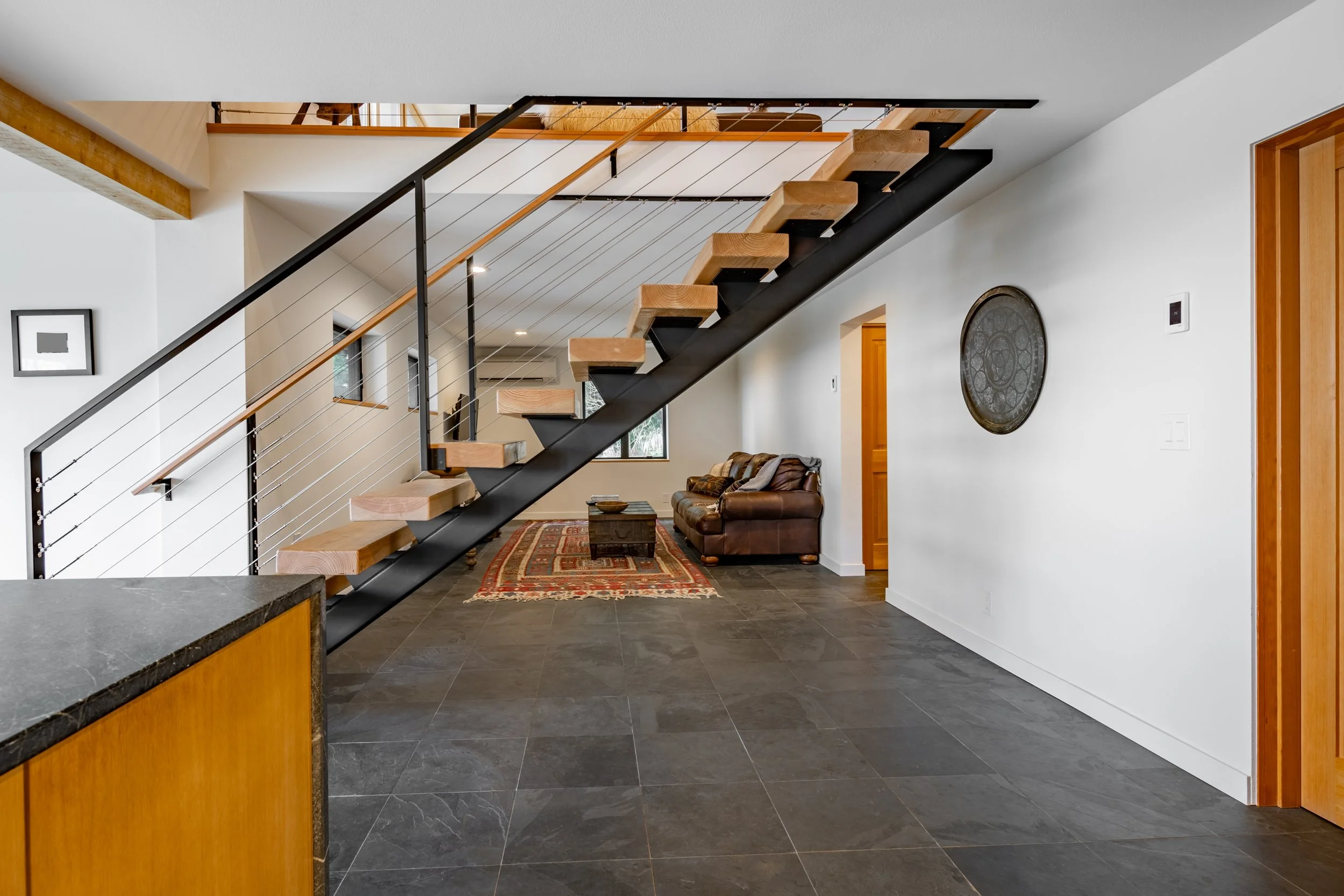
True black and dark gray slate is naturally water-resistant and non-porous, making it an ideal material for wet environments such as roofs, bathrooms, kitchens, and pool surrounds. It is also resistant to mold, mildew, and bacteria growth. On the other hand, other colors of slate can be very brittle, soft, and absorbent due to their different composition. These types of slate need to be carefully looked after since they crumble and are acid-sensitive.
Limestone
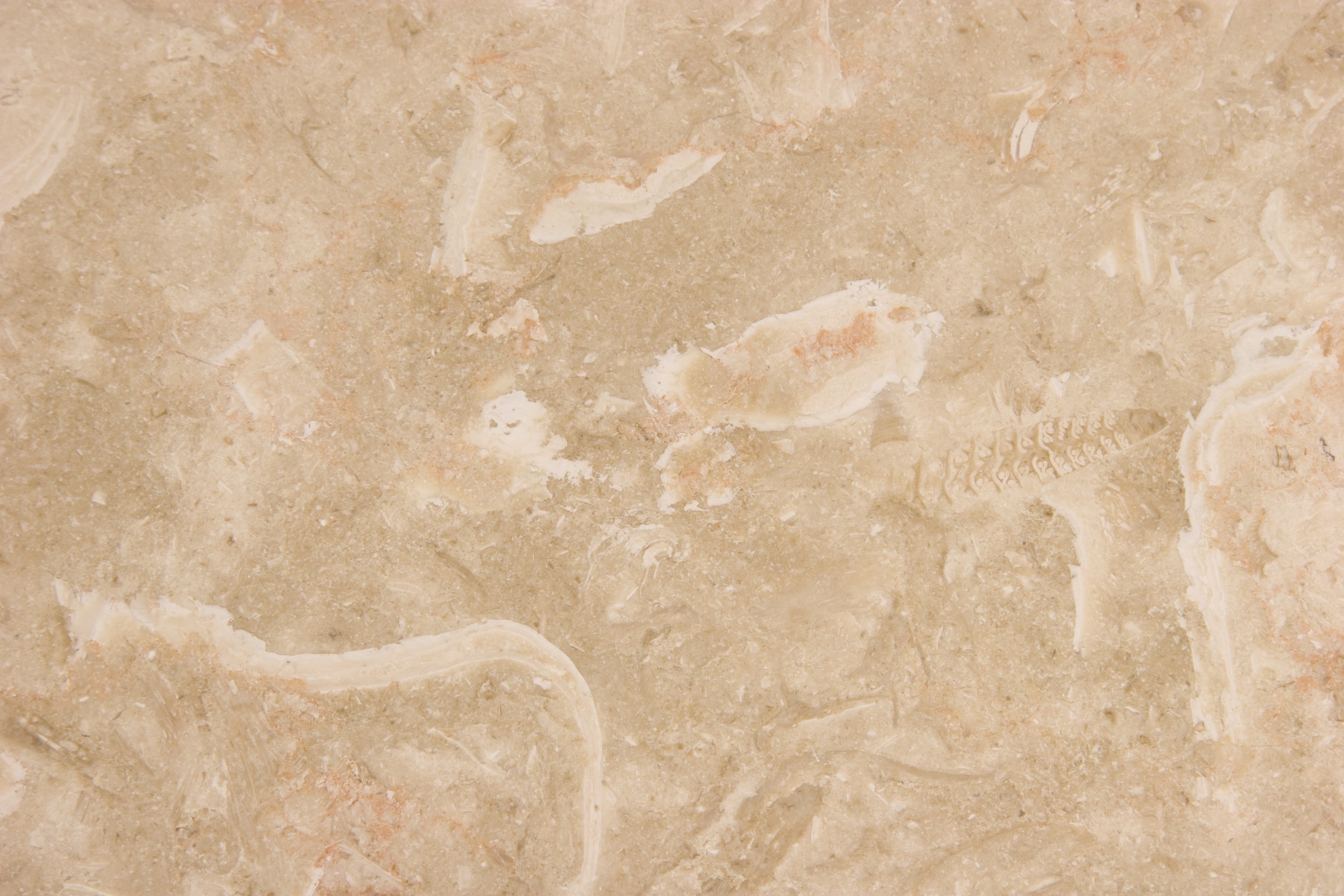
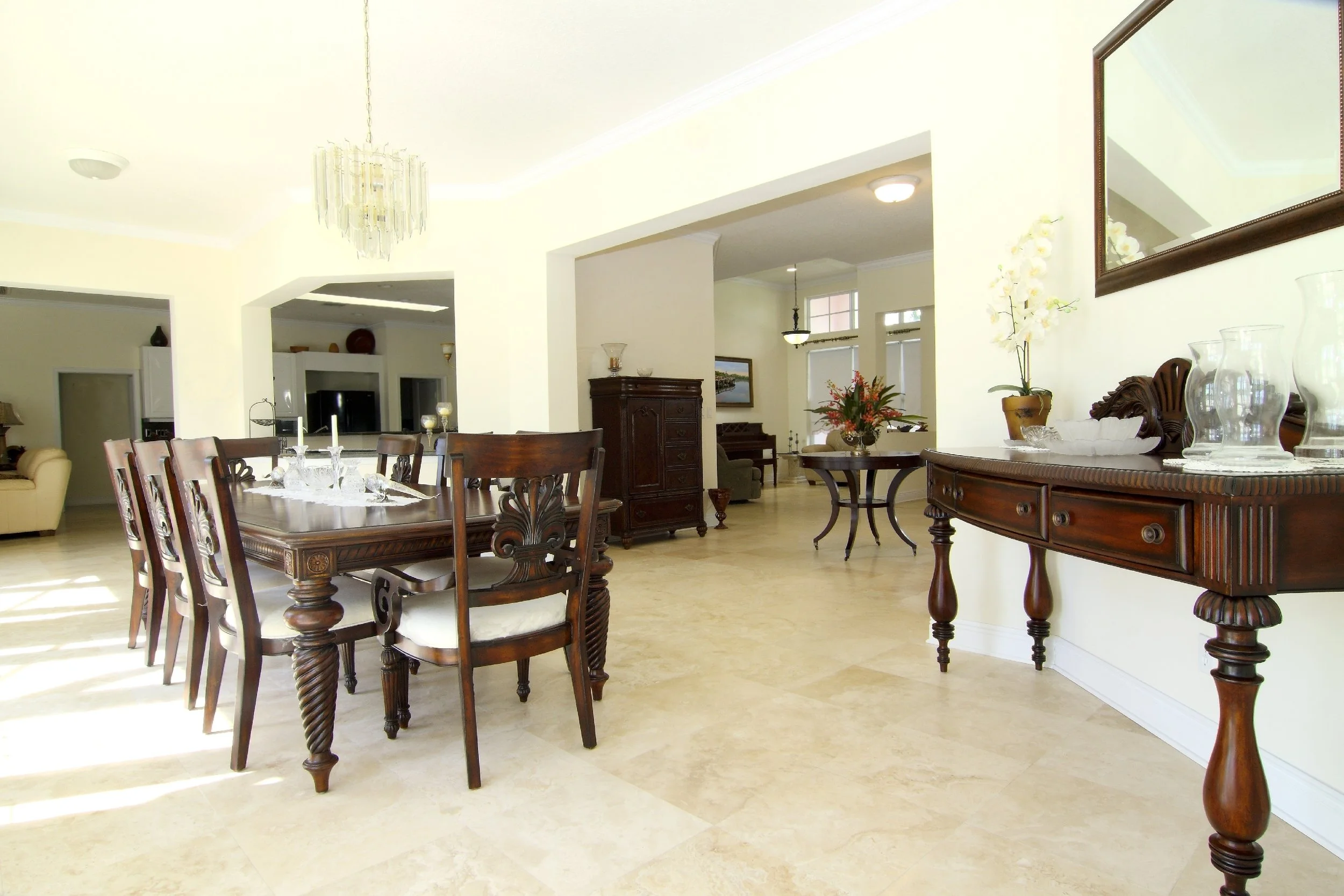
Limestone is a unique rock that forms through the accumulation of marine organisms, such as coral, shells, algae, and microorganisms, as well as through chemical precipitation from water. Over time, these materials are compacted and cemented together to form solid rock. Some limestone varieties exhibit fossilized remains of marine organisms, adding to their visual appeal.
Limestone is relatively soft compared to some other natural stones like granite or marble. It is susceptible to scratching and damage from acidic liquids and products.
Terrazzo
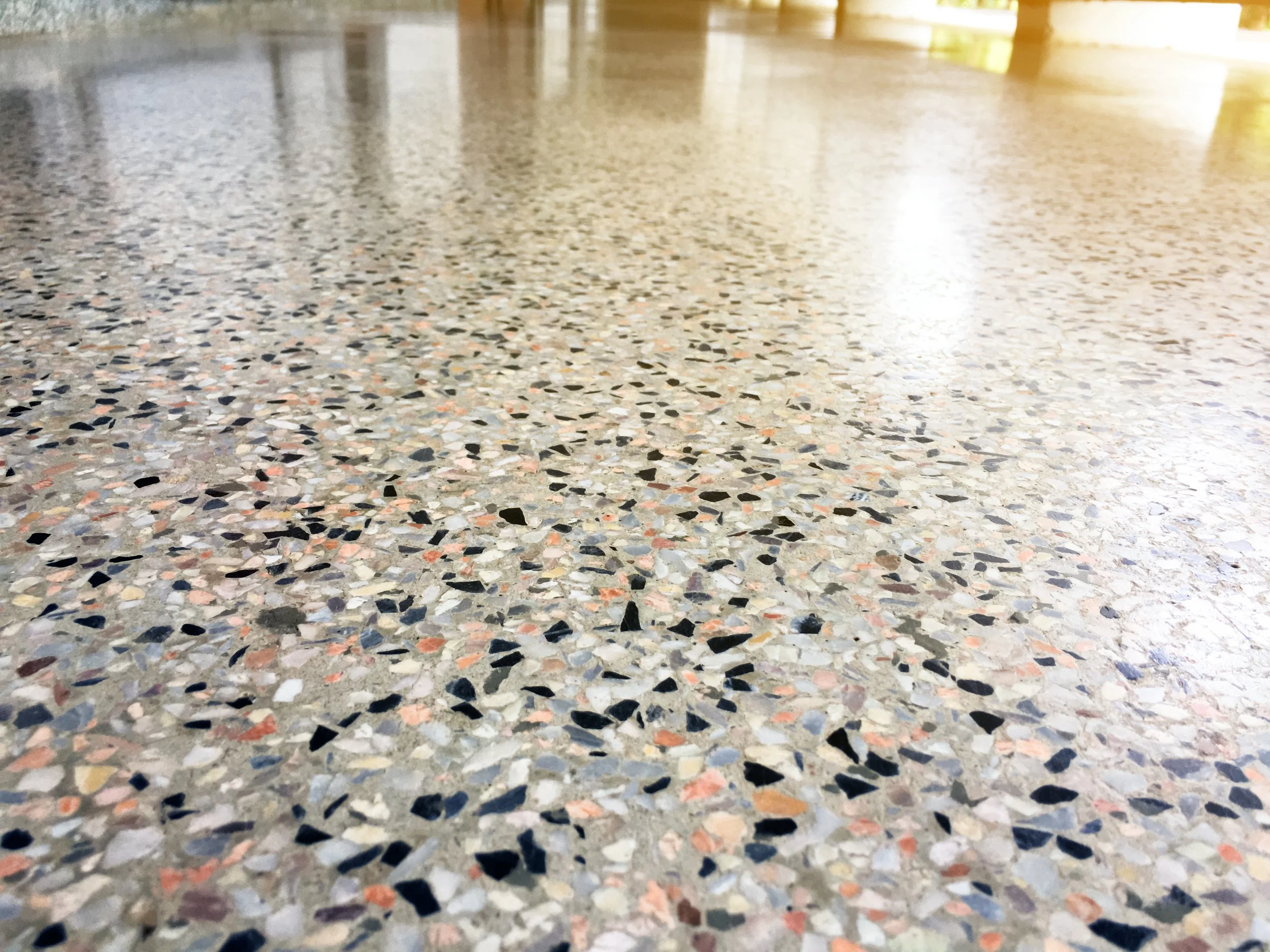
Terrazzo consists of chips of marble, quartz, granite, glass, or other suitable materials embedded in a cementitious or epoxy matrix. The chips are often of uniform size and are typically marble, which gives terrazzo its classic appearance.
Terrazzo is known for its durability and longevity. it can last for decades, even in high-traffic areas, which is one of the main reasons why it is commonly used for flooring in airports, schools, hospitals, and other public buildings.
Terrazzo is relatively easy to maintain and can withstand rough treatment in high traffic areas.