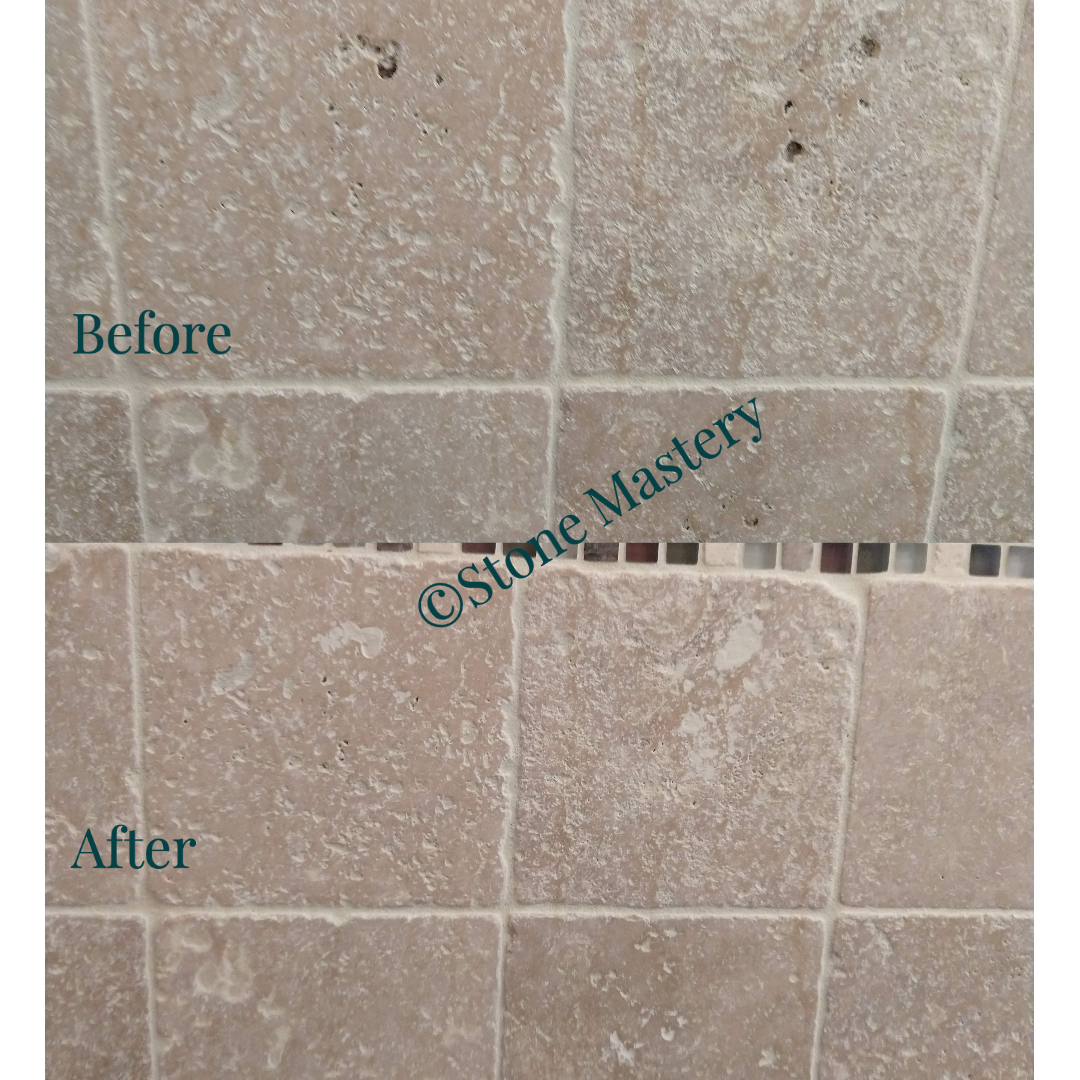
Travertine Polishing and Restoration
Travertine forms when calcium carbonate-rich waters flow through limestone and deposit minerals. Over time, these deposits build up, forming layers of travertine rock.
Travertine typically has a porous and pitted surface texture, often characterized by visible holes and voids.
Since Travertine is softer and more porous than granite or marble. It can be prone to scratching, staining, and etching, especially if not properly maintained.
Why DIY Almost Always Falls Short
We get it. There's a whole aisle of stone cleaning products at the hardware store, and the bottles make confident promises. But here's the honest reality: travertine restoration is a craft, and the tools matter as much as the technique.
Consumer-grade polishing compounds applied by hand can improve dull travertine slightly, but they can't replicate what professional diamond abrasion achieves. And the wrong product can cause real damage. Acidic cleaners — including many all-purpose household products — will etch travertine permanently. Steam cleaners can open pores and push contaminants deeper into the stone. What looks like a cleaning job can quickly become a restoration job.
More critically, uneven grinding by someone who doesn't know the equipment creates waves in the surface that are expensive to correct. Travertine is forgiving in many ways, but it remembers bad work.